
Human Rights and Trade Policy: A Political Pawn?
March 2026, Antje Schneeweiss, Committee of Church Investors Germany (AKI)
Are trade policies the appropriate means to strengthen human rights globally?
Recently we have seen the U.S. administration threating higher tariffs on Europe unless human rights legislation, which would also cover U.S. companies active in Europe, is watered down.
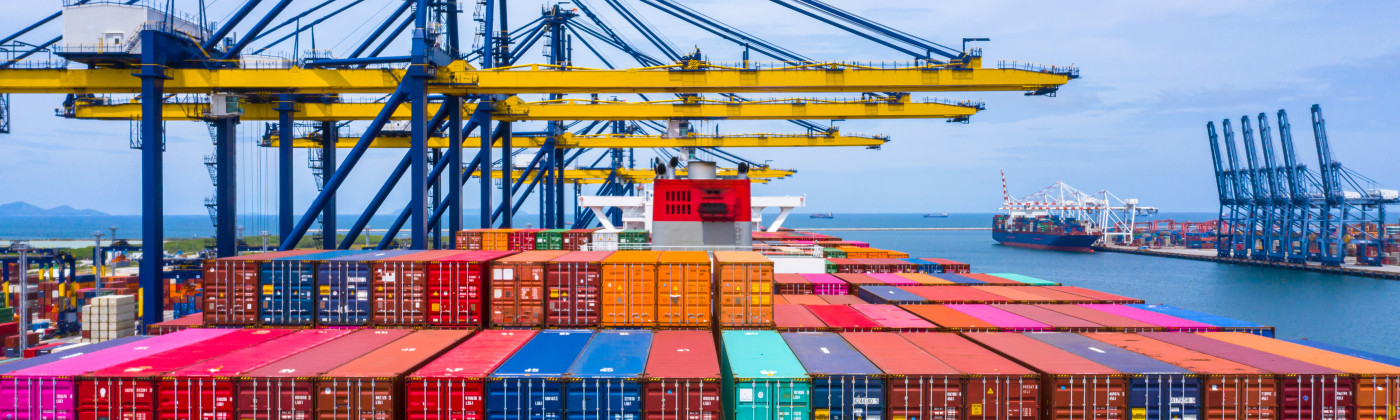
Earlier it was the other way around. Trade policy had been deployed to prevent human rights violations in other countries. This was the case when in 2021 when the U.S. border control seized shipments of medical gloves from Malaysia on indications they were made with forced labor. Another example is the “Uyghur Forced Labor Prevention Act” under which more than 25,000 shipments with goods from Xinjiang valued at almost $ 1 billion have been denied entry to the US.
At first glance, we tend to condemn the first and welcome the second. However, linking human rights to trade policy might have drawbacks.
Human rights are broad protections that cover a diverse continuum of fundamental values that ensure human dignity. Yet breaches are likely to happen in any country. That is why a trade policy which strives to enforce human rights on a trade partner is bound to focus on certain rights while ignoring others, which means it will often be biased. Traditionally, the West emphasizes freedom of expression, while communist countries point to their successes in providing their populations with basic goods and services like food, housing, health care, and education. Both cases concern human rights, and given that they are indivisible and interdependent, one set of rights cannot be more important than the other.
In this situation, linking human rights to trade policy might undermine their authority and universal validity. Instead of universal entitlements for all and in every nation, human rights might be regarded as a tool more powerful nations employ to impose their political, economic, and trade interests, together with their values, on less powerful nations. The danger is that by doing so human rights might be perceived as an instrument of power rather than the birthright of every human being.
The trade policy approach contrasts with one in which human rights are linked to institutions and systems. At the national level, these are independent national human rights institutions (NHRIs). These are supported by the United Nations and serve as independent points of contact for people whose rights have been violated. They are very close to the specific complaints of individuals and groups of people and reflect the fact that human rights violations take many forms and can occur anywhere. Most countries respect NHRI for this reason and recognize the need for an independent organization to which their citizens can turn with a complaint. Appreciating and strengthening these institutions at home and abroad might be more appropriate than enforcing a limited set of human rights abroad while ignoring human rights violations at home.
At the corporate-level, the UN Guiding Principles on Business and Human Rights (UNGPs) represent such a systemic approach.
They cover the same range of rights protections as the Universal Declaration of Human Rights and outline six steps companies should undertake to avoid being involved in human rights harms:
- Embed responsible business conduct
- Identify and assess adverse impacts in operations, supply chains, and business relationships
- Cease, prevent or mitigate adverse impacts
- Track implementation and results
- Communicate how impacts are addressed
- Provide for remediation, including operating a grievance mechanism
By requiring companies to implement these six steps, corporate human rights policies become much more than just a communication measure aimed at avoiding reputational risks. These steps place the responsibility for uncovering human rights violations - caused by, contributed to, or directly linked to companies - in the hands of the companies themselves. Companies that implement this human rights due diligence process are aware of their human rights risks at the highest level. They are accessible for relevant complaints and follow up on them. They work on solutions by entering into dialogue with the people affected.
Countries with a functioning NHRI accept that human rights violations are possible within their borders and take measures to mitigate them. Companies with human rights due diligence processes are aware of the risks and are prepared to prevent and if necessary, remedy.
In both cases, concrete efforts are made to improve the living conditions of people affected by human rights violations.
Regrettably, ESG rating agencies often base their “norms breach products” still exclusively on “controversies” found in media information, rather than on a human rights due diligence system. In contrast to credible information of involvement in human rights abuses, the absence of a human rights due diligence system is most often not a breach of norms.
The Church Commissioners of England challenge this approach with their Investor Initiative on Human Rights Data (II HRD). The initiative defines noncompliance with Business and Human Rights (BHR) standards if a company fails to demonstrate implementation of BHR standards or if a company causes, contributes or is directly linked to an adverse human rights impact and is not acting in accordance with BHR standards.
At a time when international agreements and national social and environmental regulations are under enormous pressure and global consensus is difficult to achieve, it is important to emphasise the universality of fundamental rights. In such a situation, it seems unhelpful to make them a pawn of the powerful or trade policy. We should instead emphasize the importance of constant, painstaking efforts to improve the human rights situation in all countries and situations through a range of public and private approaches and tools at various levels – local, national, regional, and international. This may be the more appropriate way to promote and safeguard human rights in the long term.